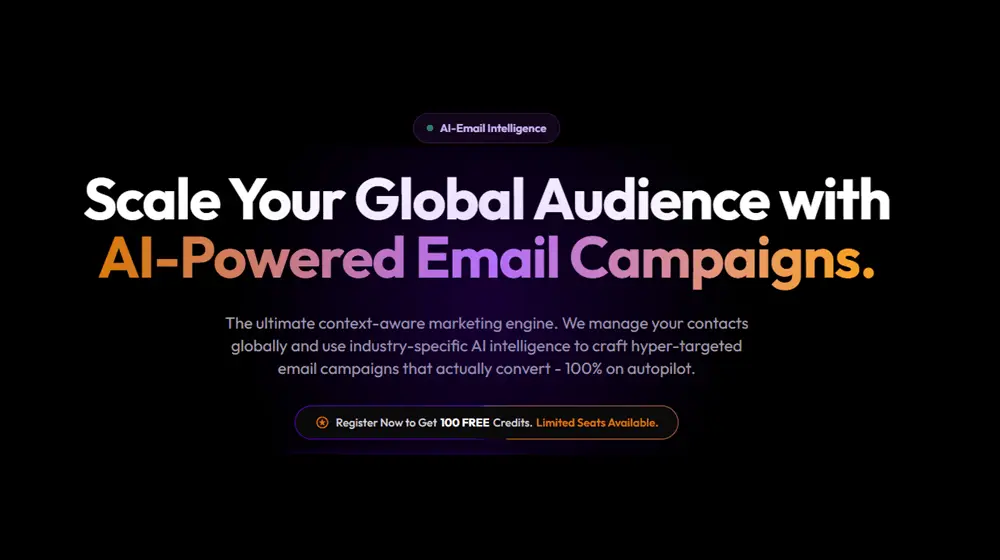
Quantum Leap: 5 Next-Gen Email Strategies for 2026
The digital world never stands still. What worked in email marketing yesterday might just be gathering dust tomorrow. We're on the cusp of a significant transformation, a "quantum leap," in how brands connect with their audiences through email. For businesses and marketers looking to truly dominate their niche by 2026, relying on outdated tactics simply won't cut it. The landscape is shifting, driven by advancements in artificial intelligence, evolving consumer expectations, and a heightened focus on privacy.
Email marketing remains one of the most powerful and cost-effective channels available. However, its power is no longer just in reaching an inbox; it's in delivering unparalleled value, relevance, and experience directly to each individual. This means moving beyond generic blasts and into a world where every email feels like a personal conversation. We have systematically analyzed emerging trends and technological breakthroughs to identify the five next-generation email marketing strategies that will define success in the coming years. These aren't just minor tweaks; these are fundamental shifts designed to build deeper customer relationships, drive significant engagement, and deliver measurable business growth.
1. Hyper-Personalization Beyond the Basics
Gone are the days when simply using a subscriber's first name was considered "personalization." In 2026, hyper-personalization will mean delivering content, offers, and experiences that are uniquely tailored to each individual's real-time behaviors, preferences, and journey. This involves going far beyond basic demographics. We are talking about understanding individual browsing history, past purchases, engagement patterns, geographic location, device usage, and even predicted future needs.
How does this work in practice? Advanced AI and machine learning algorithms are the secret sauce. These technologies continuously analyze vast amounts of data to build incredibly detailed customer profiles. For instance, if a customer frequently browses running shoes on your website but has never purchased, an AI-driven system might send them an email featuring new running shoe arrivals, coupled with customer reviews from other runners, and perhaps a personalized discount on their first pair. The email might even suggest related products like moisture-wicking socks or running apparel, all based on what the AI predicts they might need. This isn't guesswork; it's data-driven precision.
The benefits are clear: when emails feel genuinely relevant, recipients are far more likely to open them, click through, and convert. This approach significantly boosts engagement rates, reduces unsubscribe rates, and ultimately drives higher revenue per email. To effectively implement this, businesses need robust data collection capabilities and sophisticated tools that can segment and manage their audience dynamically. Our experience shows that regularly refining your Contact Lists - OGINBOX.com based on behavioral data is foundational to achieving true hyper-personalization.
2. AI-Powered Predictive Analytics for Campaign Optimization
Imagine knowing what your customers want before they even know it themselves. That's the promise of AI-powered predictive analytics in email marketing. This strategy involves using artificial intelligence not just to personalize content, but to forecast future customer behavior. AI models can analyze historical data to predict which subscribers are most likely to make a purchase, which ones might be at risk of unsubscribing, or even the optimal time of day to send an email for maximum engagement.
For example, predictive analytics can identify customers who show early signs of churn by analyzing changes in their engagement rate, website activity, or support requests. Armed with this insight, you can proactively send re-engagement campaigns with tailored offers or valuable content designed to rekindle their interest before they leave for good. Similarly, AI can pinpoint your most valuable customers and recommend exclusive content or loyalty programs to solidify their commitment. This strategic foresight allows marketers to move from reactive campaigns to proactive, highly effective interventions.
The impact on campaign performance is substantial. By predicting optimal send times, content preferences, and potential customer actions, businesses can significantly improve open rates, click-through rates, and conversion rates, while simultaneously reducing customer acquisition costs. It transforms how we approach My Campaigns - OGINBOX.com, turning them from educated guesses into data-backed, high-probability successes. A study by Accenture highlighted that businesses using AI for personalization and predictive analytics saw a 20% increase in customer lifetime value on average. Accenture's insights on AI and customer experience consistently demonstrate the tangible business benefits.
3. Interactive Email Experiences (AMP for Email & Beyond)
Imagine an email where you can browse a product catalog, fill out a survey, book an appointment, or even complete a purchase directly within the email itself, without ever leaving your inbox. This is the reality of interactive email experiences, spearheaded by technologies like AMP (Accelerated Mobile Pages) for Email. This strategy transforms static emails into dynamic, app-like mini-webpages, offering a much richer and more engaging experience for the recipient.
Traditional emails are essentially flat images and text with links. Interactive emails, however, can include carousels of images, functional forms, live content updates (like real-time stock availability), quizzes, and even fully integrated e-commerce functionalities. For instance, a retail brand could send an email where customers can view multiple product images, select sizes and colors, add items to a cart, and checkout, all within the email client. This dramatically reduces friction in the customer journey.
The primary benefit is an enhanced user experience that leads to much higher engagement and conversion rates. By removing the need to navigate to an external website, interactive emails streamline the path to purchase or action. While implementation requires a bit more technical know-how than standard HTML emails, the payoff in terms of direct conversions and customer delight can be significant. However, it's crucial to consider email client support; while major providers like Gmail and Mail.ru support AMP for Email, universal adoption is still evolving. Always provide a graceful fallback for clients that don't support interactive elements.
Comparing Traditional vs. Interactive Email
| Feature | Traditional Email | Interactive Email (e.g., AMP for Email) |
|---|---|---|
| User Experience | Static content, click to external link for action. | Dynamic, app-like functionality, actions within the email. |
| Engagement Potential | Lower, relies on compelling copy and design. | Much higher, direct interaction leads to deeper engagement. |
| Conversion Path | Multi-step (email to website to action). | Single-step (action directly within email). |
| Implementation Complexity | Relatively simple HTML/CSS. | More complex, requires specific AMP HTML and fallback versions. |
| Supported Email Clients | Nearly universal. | Growing support (Gmail, Mail.ru, Outlook.com limited, etc.). |
| Real-time Content | Not possible natively. | Can display live updates (e.g., stock, pricing). |
4. Omnichannel Integration with Email as the Central Hub
Modern consumers interact with brands across numerous channels: email, social media, SMS, website, mobile apps, and even physical stores. An omnichannel strategy ensures a seamless, consistent, and personalized experience across all these touchpoints. In this interconnected ecosystem, email marketing isn't just another channel; it becomes the central hub that orchestrates and reinforces the customer journey.
This means that an interaction on one channel should inform the communication on another. For instance, if a customer browses specific products on your website, they might receive a follow-up email featuring those products. If they engage with an ad on Instagram, they might then receive an email offering a discount on that product. Conversely, if a customer clicks a link in an email, their subsequent website experience should be tailored to that click. A truly integrated omnichannel approach leverages a unified customer profile, often powered by a CRM (Customer Relationship Management) system, to ensure that every message sent, regardless of channel, is relevant to the customer's current stage and preferences.
The benefits of this integrated approach are profound. It creates a cohesive brand experience, builds stronger customer relationships, and improves overall marketing effectiveness. By seeing the complete customer journey, businesses can attribute ROI more accurately and optimize their spend across channels. Email serves as a crucial connective tissue, allowing for deeper dives into product information, personalized offers, and direct calls to action that complement quicker, more immediate interactions on social media or SMS. This holistic view is what allows businesses to truly Scale Your Audience & Email Campaigns with AI Intelligence | Oginbox.com by ensuring every touchpoint works in harmony.
5. Privacy-First, Trust-Driven Email Marketing
With increasing awareness around data privacy and evolving regulations like GDPR, CCPA, and similar laws globally, a privacy-first approach is no longer optional; it's a fundamental requirement and a powerful differentiator. By 2026, successful email marketing will be built on a foundation of transparency, explicit consent, and a clear understanding of how customer data is used to provide value.
This strategy involves more than just checking compliance boxes. It means actively earning and maintaining subscriber trust. Provide clear consent forms that explain exactly what kind of emails subscribers will receive and how their data will be used. Offer easy-to-manage preference centers where subscribers can update their interests or frequency without having to fully unsubscribe. Be transparent about data collection practices and ensure all data is stored securely. Minimizing the data collected to only what is truly necessary for providing a high-quality service also reinforces this trust.
The advantage of a privacy-first approach is multi-faceted. It reduces the risk of legal penalties, but more importantly, it fosters a stronger, more trusting relationship with your audience. Subscribers are much more likely to engage with emails from brands they trust to handle their data responsibly. This leads to higher deliverability rates, lower spam complaints, and ultimately, a more loyal and engaged customer base. Investing in privacy is investing in the long-term health and profitability of your email program. The National Institute of Standards and Technology (NIST) provides extensive resources on best practices for data privacy and cybersecurity, which are invaluable for building this foundation. NIST's Privacy Framework offers guidance on managing privacy risks.
Embracing the Future of Email Marketing
The "quantum leap" in email marketing is not about abandoning traditional principles; it's about elevating them with intelligence, interactivity, and integrity. The five strategies outlined above – hyper-personalization, AI-powered predictive analytics, interactive experiences, omnichannel integration, and a privacy-first mindset – represent the forefront of this evolution. They are not merely trends but foundational shifts that will redefine what it means to connect with customers in a meaningful and profitable way.
For marketers and businesses, the time to adapt is now. Experiment with new technologies, invest in data infrastructure, and continuously refine your understanding of your audience. By proactively embracing these next-gen strategies, you won't just keep pace with the competition; you'll be leading the charge, building stronger customer relationships, and ensuring your email marketing efforts truly dominate by 2026 and beyond. The future of email is intelligent, engaging, and deeply personal, and the brands that master this will be the ones that thrive.