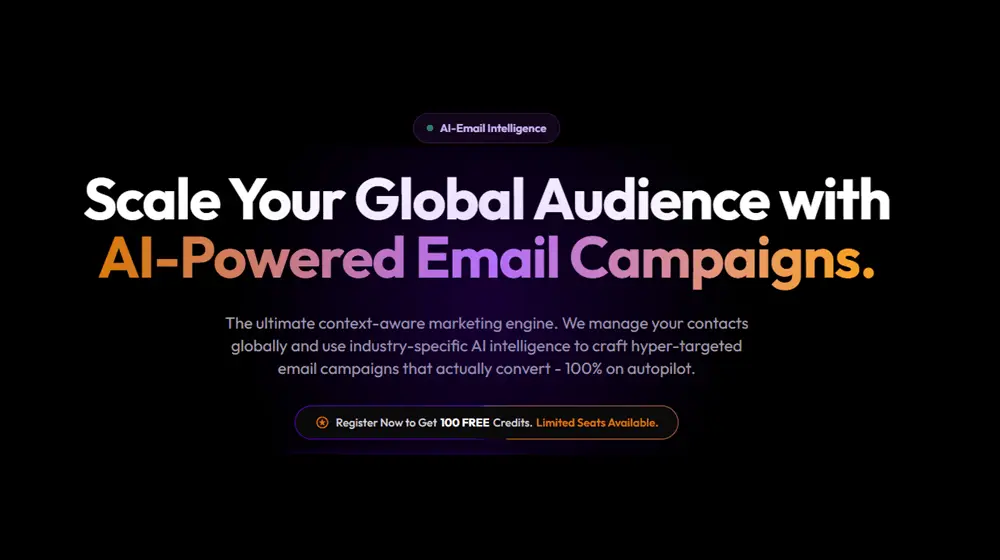
Welcome to 2026, where the inbox is no longer just a digital mailbox but a dynamic ecosystem. For years, marketers have chased the elusive "best" email marketing software, believing that one perfect tool could solve all their engagement woes. At OG INBOX, we've systematically analyzed the ever-evolving digital landscape, and we're here to tell you that this notion is, quite frankly, a myth. The truth is, the email marketing solution that propels your brand forward in 2026 isn't a singular, universally acclaimed platform, but rather the one meticulously tailored to your unique goals, audience, and operational philosophy. The era of one-size-fits-all email marketing is definitively over, replaced by a sophisticated demand for hyper-personalization, AI-driven insights, and seamless integration. We will guide you through this complex terrain, debunking common misconceptions and presenting a strategic framework for choosing an email engine that truly turns signals into conversations, not just broadcasts.
The Evolving Landscape of Email Marketing in 2026
The digital marketing world never stands still, and email marketing, far from being an archaic channel, continues to prove its immense value. In 2025, approximately 4.5 billion people used email, a number projected to grow to over 4.8 billion by 2027. This widespread adoption, however, comes with increased competition for inbox attention. Email marketing still delivers a remarkable return on investment (ROI), often between USD 36 and USD 42 for every dollar spent. Yet, achieving this ROI in 2026 requires a fundamentally different approach than in previous years.
Beyond Bulk Blasts: The Rise of Personalization and AI
The days of generic, mass-marketing messages are behind us. Modern consumers expect and demand relevance. We've observed a significant shift towards "hyper-personalization" – where emails adapt dynamically based on real-time data, including browsing behavior, purchase history, and engagement timing. This isn't merely about inserting a first name; it's about delivering content, recommendations, and offers that resonate deeply with individual preferences at the moment of engagement.
Artificial Intelligence (AI) is the driving force behind this transformation. AI isn't just a buzzword; it's a game-changer that helps marketers work smarter and faster. AI-powered tools are now capable of generating subject lines, crafting email copy, creating visuals, and even determining optimal send times and frequencies. Industry research indicates that integrating AI into email marketing strategies can lead to a 41% increase in revenue and a 13.44% boost in click-through rates (CTRs). Moreover, AI allows for dynamic adjustments in real-time, tailoring content based on current browsing patterns, updating pricing, or adjusting offers based on a subscriber's location or local weather.
Why 'One Size Fits All' No Longer Works
The idea of a single "best" email marketing software is outdated because every business has unique needs, objectives, and customer journeys. What works for a small e-commerce startup might be woefully inadequate for a large enterprise managing complex B2B sales cycles. We've seen countless organizations struggle when they prioritize a feature checklist over a deep understanding of their own business requirements. The "best" platform is not the one with the most features, but the one that empowers your team, integrates seamlessly with your existing tech stack, and scales with your growth.
Debunking the Myth: There's No Single 'Best' Email Marketing Software
We approach the selection of email marketing software as a strategic business decision, not merely a technology purchase. The right platform is an investment that helps you communicate effectively, automate repetitive tasks, enhance customer experiences, and gain meaningful insights into marketing performance.
Understanding Your Unique Needs: The Real Deciding Factor
Before even looking at software, we advise our partners to define their business goals clearly. What role does email play in your overall marketing strategy? What specific outcomes are you trying to achieve? Are you focused on lead generation, customer nurturing, increasing retention, promoting events, or driving repeat purchases? Your answers to these questions will dictate the features and capabilities that are genuinely essential, rather than just nice-to-haves. For example, if your primary goal is to increase customer retention, you'll need robust segmentation and automation capabilities that support lifecycle journeys.
Key Criteria for Evaluating Email Platforms
When evaluating email marketing software, we consider several critical criteria that go beyond superficial feature comparisons. Two platforms might both claim "automation," but the depth and flexibility of their automation engines can vary dramatically.
| Criterion | Description & Why It Matters for 2026 |
|---|---|
| Scalability | A platform must gracefully handle your growth, from subscriber count to email volume and automation complexity. Entry-level pricing can be misleading; focus on how costs and capabilities scale as your business expands. |
| Integration Capabilities | Seamless connections with your CRM, e-commerce platform, analytics tools, and other marketing systems are non-negotiable. Look for native, bi-directional data synchronization to ensure a unified customer view. |
| Automation & AI | Beyond simple drip campaigns, assess the platform's ability to orchestrate multi-step behavioral journeys. AI-driven features for content creation, personalization, segmentation, and send-time optimization are crucial for maximizing engagement. |
| Analytics & Reporting | Robust reporting provides actionable insights into campaign performance, subscriber behavior, and ROI. Look for tools that offer predictive analytics to forecast future trends and customer actions. |
| Deliverability & Compliance | Ensuring your emails land in the inbox, not the spam folder, is paramount. The platform should have strong deliverability practices, robust authentication, and features to help you comply with privacy regulations (e.g., GDPR, CCPA). |
| Support & Pricing Model | Reliable customer support and clear, transparent pricing models (considering contact limits, email volume, user licenses, and add-ons) are vital for long-term satisfaction and budget planning. |
The OG INBOX Philosophy: Signals into Conversations
At OG INBOX (oginbox.com), our core philosophy is built around transforming impersonal signals into meaningful conversations. We recognize that the future of email marketing lies in moving beyond bulk sends and towards intelligent, contextual interactions. Our AI-powered email engine is designed to do exactly that: send the right message, to the right person, at the right time. This aligns perfectly with the hyper-personalization trend dominating 2026, where relevance and timing dictate engagement.
How OG INBOX Reimagines Email Engagement
We believe that every customer interaction provides valuable signals – a website visit, a product view, an abandoned cart, a previous purchase. Our platform uses advanced AI and machine learning to interpret these signals, understanding individual customer behavior and preferences in real-time. This allows us to craft and deliver highly relevant communications that feel less like marketing and more like a helpful, personalized dialogue. We aim to anticipate needs and provide value, fostering deeper relationships between brands and their audiences.
The Power of AI-Driven Personalization
Our approach leverages AI not just for automation, but for intelligent orchestration. We utilize AI to analyze vast datasets, predict customer behaviors, and dynamically adjust email content, offers, and send times for optimal impact. This goes far beyond basic segmentation; it's about creating truly unique experiences for each subscriber, making them feel seen and valued. The measurable benefits of this approach are clear: personalized emails achieve significantly higher open rates and click-through rates, and can even drive higher transaction rates compared to generic messages. According to a study assessing the impact of automation on open rates and consumer trust, AI significantly improves the effectiveness of email marketing while emphasizing the need for considerate information handling for lasting customer relationships.
Unveiling 3 Powerful Email Marketing Alternatives for 2026
While we advocate for our AI-first approach, we also acknowledge that different business models require different solutions. Here, we present three archetypes of email marketing platforms that excel in specific scenarios, moving beyond specific brand names to focus on the underlying strengths that address diverse needs in 2026.
Alternative 1: The Hyper-Personalization & Behavioral AI Engine
This category represents platforms that prioritize deep behavioral tracking and advanced AI to create highly individualized customer journeys. They are ideal for businesses with complex customer lifecycles and a strong focus on nurturing relationships through dynamic, context-aware communication. These tools excel at analyzing micro-behaviors – like zooming in on a product image or repeatedly visiting a category page – to trigger incredibly precise and timely messages. They offer sophisticated visual journey builders and often integrate predictive analytics to forecast future customer actions, making them powerful for proactive engagement.
Alternative 2: The E-commerce & Lifecycle Automation Powerhouse
Platforms in this alternative are tailor-made for e-commerce businesses, offering robust integrations with online stores (like Shopify, WooCommerce, etc.) and specialized features for product recommendations, abandoned cart recovery, and post-purchase follow-ups. They emphasize lifecycle automation, allowing businesses to map out entire customer journeys from acquisition to retention. These solutions are often rich in pre-built templates and workflows designed to convert browsers into buyers and encourage repeat purchases, leveraging transactional data for highly relevant offers. As detailed by the American Marketing Association, tailoring both content and subject lines to your audience not only captures attention but also encourages active engagement and can significantly boost revenue.
Alternative 3: The Enterprise-Grade CRM-Integrated Suite
This alternative caters to larger organizations requiring seamless integration with comprehensive Customer Relationship Management (CRM) systems and other enterprise tools. These platforms offer extensive customization, advanced security features, and the ability to handle massive subscriber lists and intricate, multi-departmental workflows. Their strength lies in unifying customer data across sales, marketing, and support, ensuring that all communications are consistent and informed by a 360-degree view of the customer. They typically provide sophisticated user management, API access for custom integrations, and dedicated support for complex implementations.
Making Your Choice: A Strategic Approach for 2026
In 2026, choosing an email marketing platform is a long-term infrastructure decision, not just a short-term tool choice. It should support where your business is today and provide ample room to grow tomorrow.
Defining Your Goals and Audience
We cannot stress this enough: start with your goals. Are you aiming to boost sales, increase brand loyalty, or improve customer service? Who is your target audience, and what are their behaviors and preferences? The clearer you are on these foundational elements, the easier it will be to identify a platform that can genuinely deliver on your objectives.
Prioritizing Features and Budget
Once your goals are clear, prioritize the features that directly support them. Resist the urge to be swayed by an endless list of functionalities you might never use. Consider the depth of critical features like automation, personalization, and analytics, rather than just their presence. Simultaneously, evaluate the pricing structure carefully. Understand not just the initial monthly fee, but how costs scale with your subscriber count, email volume, and feature usage over time. A platform that appears inexpensive today might become considerably more costly as your business expands.
The Importance of Testing and Iteration
Even with the most meticulous planning, the real-world performance of an email marketing solution can only be fully understood through use. We encourage a mindset of continuous testing and iteration. Start with a foundational setup, gather data, analyze performance, and then refine your strategies and platform usage. The best email engines allow for flexibility and optimization, helping you adapt to new trends and evolving customer expectations. The "State of Email 2026" report notes that AI is influencing both sides of email sending, with marketers using AI to optimize campaigns and subscribers using AI to manage what they read, underscoring the need for relevance and clarity.
Conclusion
The myth of the single "best" email marketing software for 2026 is officially busted. We've shown that the path to email marketing success lies in a strategic, informed decision-making process centered on your unique business needs and the dynamic capabilities of modern AI and personalization. The future of email is not about broadcasting; it's about connecting. By focusing on solutions that enable hyper-personalization, intelligent automation, and seamless integration, you can build an email strategy that genuinely turns signals into conversations, fostering deeper customer relationships and driving sustainable growth. Choose wisely, focus on what truly matters, and watch your email channel transform from a mere communication tool into a powerful engine for engagement.